
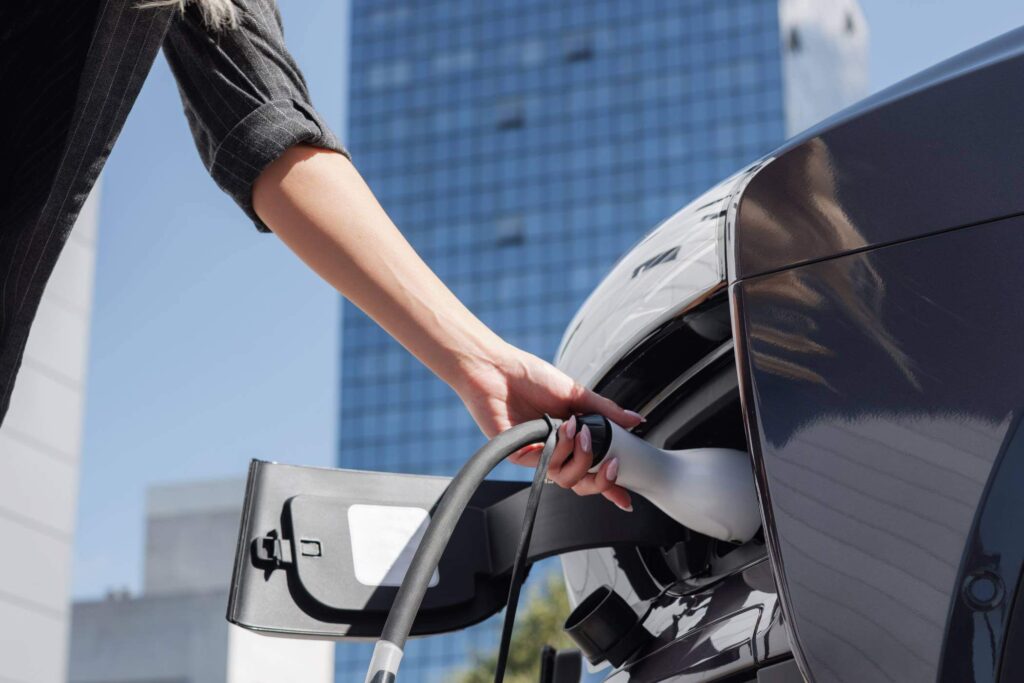
Electric vehicles have become an increasingly popular choice for businesses, company directors and employees looking to reduce running costs and move towards lower-emission transport.
However, the tax position surrounding electric vehicles is changing.
One area that has recently received attention is VAT on public EV charging. HMRC’s current position is that electricity supplied through public electric vehicle charging points remains subject to the standard 20% VAT rate.
This differs from electricity supplied for domestic use, which can qualify for the reduced 5% VAT rate. It means charging an electric vehicle away from home can have different VAT implications depending on where and how the electricity is supplied.
At the same time, some of the other tax advantages associated with electric vehicles are gradually becoming less generous. Company car Benefit-in-Kind rates are increasing, while electric vehicles are now included within the Vehicle Excise Duty system.
Despite these changes, electric vehicles can still offer tax advantages compared with many petrol and diesel company cars.
For businesses, the important thing is to consider the overall tax position rather than focusing on a single cost. Our experienced accountants in Bedford can help you understand what the changing rules could mean for your business and company vehicles.
How Is Public EV Charging Taxed?
The VAT treatment of electric vehicle charging depends partly on where the vehicle is charged.
Electricity supplied through a public EV charging point is generally subject to the standard 20% VAT rate. Electricity supplied for qualifying domestic use, however, can benefit from the reduced 5% VAT rate.
For drivers, this means the tax treatment of the electricity used to charge the same vehicle can differ depending on whether they plug in at home or use a public charging point.
For VAT-registered businesses, there is another consideration. Where the company pays for charging used by an employee or director, it is important to establish whether the VAT can be reclaimed and what records need to be kept.
In this article, we’ll cover:
- Why Does Public EV Charging Have 20% VAT?
- What Was The Recent EV Charging VAT Case?
- Can Businesses Reclaim VAT On EV Charging?
- What Are The Benefit-in-Kind Rates For Electric Cars?
- Do Electric Vehicles Pay Vehicle Excise Duty?
- Are Electric Company Cars Still Tax-Efficient?
- What Should You Consider Before Buying An EV Through Your Company?
- How Digital Tax Matters Can Help


Why Does Public EV Charging Have 20% VAT?
Electricity supplied through public EV charging points is currently treated as a standard-rated supply for VAT purposes. This means VAT is charged at 20%.
This differs from electricity supplied for qualifying domestic use, which can benefit from the reduced 5% rate. If someone charges an electric vehicle at home using their normal domestic electricity supply, the electricity used will generally be included in their household energy bill and subject to the reduced rate. The position changes when they use a public charging point.
HMRC does not consider a public EV charging point to meet the conditions required for the reduced domestic rate. Electricity supplied through public charging infrastructure is therefore standard-rated.
The electricity itself may be used for the same purpose, but the circumstances under which it is supplied affect its VAT treatment. This can be particularly relevant to employees and directors who regularly travel for work. A company car may be charged at home one day and at a motorway service station or public car park the next. Businesses therefore need to understand what charging costs are being paid or reimbursed and whether any VAT can be recovered.
HMRC’s guidance on VAT for fuel and power provides further information about when the reduced and standard rates of VAT apply.
What Was The Recent EV Charging VAT Case?
The VAT treatment of public EV charging received renewed attention following a First-tier Tribunal case involving Charge My Street Limited and HMRC. The case considered whether certain supplies of electricity through public charging points could qualify for the reduced VAT rate. The Tribunal found in favour of Charge My Street Limited. However, HMRC subsequently confirmed that it had applied for permission to appeal the decision.
Importantly, HMRC has not changed its policy while this process continues. In Revenue and Customs Brief 4 (2026), HMRC confirmed that its position remains that electricity supplied through public EV charging points is standard-rated for VAT purposes. Businesses should therefore continue to operate under the current 20% VAT treatment unless HMRC announces a change.
You can read HMRC’s Revenue and Customs Brief 4 (2026) for further information about the case and HMRC’s current position.

Can Businesses Reclaim VAT On EV Charging?
For VAT-registered businesses, the next question is whether VAT paid on electric vehicle charging can be recovered.
Where electricity is purchased for genuine business use, and the normal conditions for VAT recovery are satisfied, it may be possible to reclaim VAT on eligible charging costs. However, the treatment will depend on the circumstances.
This is particularly important where a vehicle is used for both business and private journeys or where an employee pays for charging personally before claiming the cost back from the company. Businesses should ensure they have sufficient evidence to support any VAT reclaimed.
Public charging networks can operate in different ways. Some issue individual VAT receipts for each charging session, while others operate through apps, monthly accounts or subscription services.
Businesses should retain appropriate invoices, receipts or statements alongside their accounting records. Where an employee pays personally and is later reimbursed, the supporting evidence should also be retained rather than relying only on the expense claim. Mileage records may also be necessary where a vehicle has mixed business and private use.
Having a consistent process can make this easier. If several employees use electric company vehicles, for example, the business could establish a standard process for submitting charging receipts and recording the purpose of journeys. This provides a clearer audit trail and helps ensure VAT is treated consistently.
What Are The Benefit-in-Kind Rates For Electric Cars?
VAT on charging is only one part of the tax position when a company provides an electric vehicle. Where a company car is available to an employee or director for private use, it can create a Benefit-in-Kind tax charge.
Electric vehicles have benefited from particularly low Benefit-in-Kind percentages compared with many petrol and diesel vehicles. This has been one of the main reasons electric company cars have become attractive to business owners and directors.
For the 2026–27 tax year, the appropriate percentage for a zero-emission company car is 4%. However, this rate is scheduled to increase over the coming years, eventually reaching 9% for 2029–30. This is important when choosing a company car that may be retained for several years.
A director selecting an electric company car in 2026 may initially calculate their tax liability using the 4% appropriate percentage. The taxable benefit can then increase as the percentage rises during the period they have the vehicle.
Businesses should therefore consider future Benefit-in-Kind rates, as well as the rate that applies when the vehicle is first purchased or leased.
HMRC has published company car tax rates through to 2029–30, which can help businesses plan.
Although the rates are increasing, zero-emission company cars can still attract considerably lower Benefit-in-Kind percentages than many higher-emission vehicles.

Do Electric Vehicles Pay Vehicle Excise Duty?
Another change for electric vehicle owners is Vehicle Excise Duty.
Electric vehicles were previously exempt from Vehicle Excise Duty, but this changed from 1 April 2025. Electric, zero-emission and low-emission vehicles are now included within the Vehicle Excise Duty system.
For 2026–27, a new electric or zero-emission car registered on or after 1 April 2025 generally pays £10 in its first year. From its second year, the standard annual rate is £200.
The position may vary depending on when the vehicle was first registered, so businesses and individuals with older electric vehicles should check the rules that apply to their particular vehicle.
There is also the Expensive Car Supplement to consider. From 1 April 2026, the threshold for zero-emission vehicles increased to more than £50,000. Where an eligible electric vehicle has a list price above this amount, an additional charge can apply for five years from the second year of vehicle tax.
The Government’s guidance on vehicle tax for electric and low-emission vehicles provides more information about the current rules and how they differ according to registration date.
Vehicle Excise Duty should therefore now be included when businesses calculate the overall cost of an electric vehicle.
Are Electric Company Cars Still Tax-Efficient?
With VAT on public charging, increasing Benefit-in-Kind rates and Vehicle Excise Duty, the tax advantages of electric vehicles are disappearing. However, electric company cars can still offer tax benefits.
One of the biggest advantages remains the relatively low Benefit-in-Kind percentage. Even as the zero-emission rate increases, it can remain significantly lower than the percentage applying to many petrol and diesel company cars.
There can also be other tax considerations depending on how the vehicle is acquired. For example, capital allowance treatment may be relevant where a company purchases a qualifying new and unused electric car.
Running costs should also be considered. How often the vehicle is used, where it is charged, the cost of electricity and annual mileage can all affect the overall financial position.
This is why it is important not to judge an electric vehicle’s tax efficiency based on a single figure. Paying 20% VAT on public charging may increase one cost, while the Benefit-in-Kind treatment of the vehicle could still provide savings elsewhere. The overall position will depend on the business, the vehicle and how it is used.
What Should You Consider Before Buying An EV Through Your Company?
Buying an electric car through a limited company can have very different tax consequences from purchasing the same vehicle personally.
Before making a decision, businesses should consider how the vehicle will be used, its purchase price and how it will be funded.
A director who mainly charges their vehicle at home and covers significant business mileage may have a different cost profile from someone who relies heavily on public rapid chargers.
The vehicle’s price can also affect the calculation. A more expensive car can result in a higher Benefit-in-Kind cash value and may also be subject to the Vehicle Excise Duty Expensive Car Supplement.
How the vehicle is acquired matters too. Buying a vehicle outright, financing it, and leasing it can each have different accounting and tax implications.
It is also worth looking beyond the current tax year. If the vehicle will be kept for several years, future Benefit-in-Kind rates should be factored into the calculation.
Running the figures before committing to a vehicle can give you a much clearer understanding of the actual cost to both the company and the individual.
How Digital Tax Matters Can Help
Electric vehicles remain an attractive option for many businesses, but the tax rules surrounding them are changing.
At Digital Tax Matters, our experienced accountants in Bedford can help you understand the tax implications of purchasing, leasing and running an electric vehicle through your company.
We can look at the wider picture, including Benefit-in-Kind, VAT, charging costs, business use and the way the vehicle will be purchased.
If your business already operates electric vehicles, we can also help ensure charging expenses and VAT are being recorded correctly.
This can be particularly useful where directors and employees charge vehicles in different locations or pay for charging personally before claiming the cost back from the company.
Understanding the position before making a purchase can help you make a more informed decision and avoid unexpected tax costs later.

Electric Vehicles: Look At The Complete Tax Picture
The tax treatment of electric vehicles is changing.
Public EV charging remains subject to 20% VAT under HMRC’s current position; Benefit-in-Kind percentages for zero-emission company cars are gradually increasing, and electric vehicles are now included in the Vehicle Excise Duty system.
However, this does not mean electric company cars are no longer worth considering.
Their Benefit-in-Kind treatment can still compare favourably with many petrol and diesel alternatives. At the same time, the overall tax position will depend on the vehicle, how it is purchased and how it is used.
The key is to look beyond a single tax charge and consider the total cost.
If you’re considering purchasing or leasing an electric vehicle through your company, contact Digital Tax Matters today. We can help you understand the tax implications and how the vehicle could fit into your wider business finances.